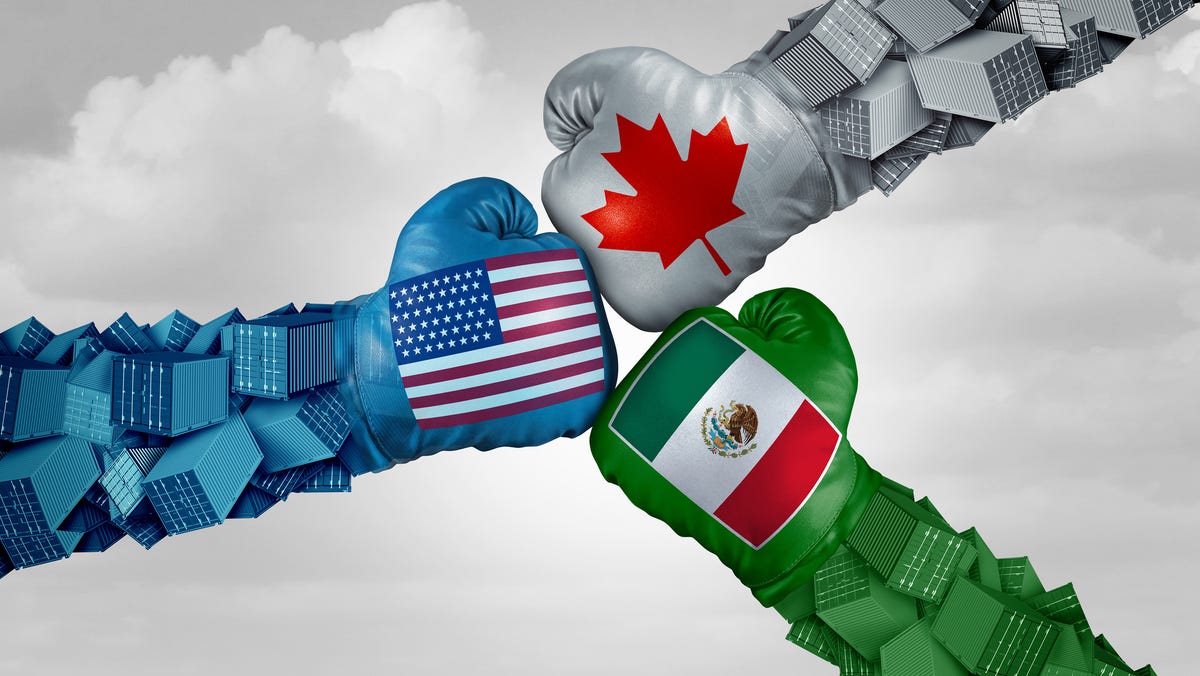
Tariffs And The Canadian Construction Industry: Legal Impacts And Strategies – Construction & Planning

Introduction
The Canadian construction industry is grappling with the ongoing
fallout from recent tariff measures between Canada and the United
States. With highly integrated cross-border supply chains, a 25%
tariff on steel, aluminum, and other building materials have had
both swift and severe effects. Contractors are likely to see higher
material costs (for steel, aluminum, and lumber, in particular),
and supply chain delays, while project owners face budget overruns
and an increased risk of contractual disputes over who bears these
costs.
This article aims to analyze how these tariffs (both in effect
and expected) will, or are already, intersecting with Canadian
trade laws and construction contracts, what the broader economic
impacts on stakeholders from contractors to suppliers may be, and
provide practical strategies to mitigate these risks.
Canadian Legal Frameworks Affected
Tariffs on construction materials engage multiple layers of
Canada’s legal framework, from international trade agreements
to domestic regulations. Understanding these frameworks is crucial
for industry professionals to navigate rights and obligations when
tariffs strike.
USMCA and Cross-Border Trade Law
The United States–Mexico–Canada Agreement (USMCA,
known as CUSMA in Canada), and formerly, NAFTA, generally
guarantees free trade in goods between Canada and the U.S.,
eliminating most import tariffs. However, it does not preclude
tariffs entirely. Each country can still invoke trade remedies or
national security measures that impose duties outside the usual
free-trade rules. For example, the U.S. government’s 2018
“national security” tariffs on Canadian steel and
aluminum – and Canada’s retaliatory duties –
occurred despite the free-trade spirit of NAFTA/USMCA. Resolving
such disputes required political negotiation beyond the trade
agreement itself. Notably, USMCA’s chapter on government
procurement does not cover U.S.-Canada procurement, so access to
each other’s public projects relies on the WTO’s Agreement
on Government Procurement (GPA). Taking the form of a plurilateral
WTO treaty, the GPA obliges Canada and other signatories to give
foreign suppliers open, non-discriminatory access to covered public
procurements.
Government Procurement Laws
Public construction procurement in Canada is constrained by
trade commitments that require open and fair competition.
Government entities generally cannot respond to tariffs by simply
preferring domestic suppliers, as agreements like the WTO Agreement
on Government Procurement (GPA) (and prior NAFTA commitments)
oblige them to treat foreign bidders equally. Instead, public
owners must manage tariff impacts through contract terms (e.g.
price adjustment clauses) or project budgeting rather than through
protectionist purchasing policies.
Domestic Trade Regulations
Within Canada, statutes such as the Customs Tariff and
the Special Import Measures Act (SIMA) empower the federal
government to impose tariffs, surtaxes, and
anti-dumping/countervailing duties.1 For example, in
2025 Canada announced 25% retaliatory tariffs on $155 billion
of U.S. goods after the U.S. imposed new tariffs on Canadian
products.2 Likewise, anti-dumping duties on construction
inputs (like steel rebar) have increased costs for domestic
builders. While interprovincial trade is tariff-free under the
Canadian Free Trade Agreement, federal trade measures determine the
costs of imported materials. The government can also provide relief
– for instance, a remission process exists to exempt certain
imports from tariffs in exceptional cases. Construction firms must
stay mindful of these domestic trade tools, as they directly
influence material pricing and availability.
Tariffs in Construction Contracts: Case Law and
Hypotheticals
Tariffs can up-end construction contracts, raising the question:
who is responsible to incur the costs of an unexpected increase in
material costs? The answer often lies in the contract’s risk
allocation. Many standard construction contracts do not explicitly
mention “tariffs,” but they do address changes in
“taxes” or “duties,” which are closely related.
For example, the standard CCDC 2 Stipulated Price Contract provides
that the contract price includes all applicable taxes and
customs duties at the time of bid closing, and any increase or
decrease in costs due to changes in those taxes or duties after the
bid shall adjust the contract price. A new tariff is essentially a
new or increased customs duty, so under such clauses a contractor
can seek an upward price adjustment to offset tariff costs.
Not all contracts contain these protections. In the absence of a
tax/duty adjustment clause, the risk of cost increases from tariffs
generally falls on the contractor in a fixed-price agreement.
Contractors have attempted to find relief under doctrines like
force majeure, but Canadian case law sets a high bar.
Courts distinguish between an unforeseen event that prevents
performance and one that merely makes it more expensive. If
performance is still possible (albeit at a higher cost), force
majeure will typically not apply.
Consider this hypothetical scenario: a contractor bids a
fixed-price project before any tariffs, then mid-project a new 25%
import duty on steel is imposed. Under a contract with a clause
like GC 10.1 in a CCDC2 form of contract, this change in law would
increase the contract price to cover the new duty. If the contract
lacks such a clause, however, the contractor may have to absorb the
increase. Unless a force majeure or change-in-law
provision can be interpreted to cover the tariff, the owner has no
obligation to pay more. In practice, the contractor might appeal to
the owner for relief or attempt to renegotiate to avoid a harmful
loss. Industry groups like the CCA have encouraged owners to be
reasonable in such situations and consider adjusting the contract
price for unforeseen tariff costs. Ultimately, allocating tariff
risk clearly in the contract (through price adjustment or
escalation clauses) is the best way to prevent disputes.
Broader Economic Impact on the Industry
Tariffs on construction materials have ripple effects beyond
individual contracts, affecting stakeholders across the
construction sector – from contractors and developers to
suppliers, manufacturers, and end-users.
Contractors and Developers: Contractors often
work on thin margins, so a 25% spike in material costs can move a
profitable project into the red. This risk is especially acute for
fixed-price contracts that lack escalation clauses. Project
developers and owners may see financing gaps and budget overruns;
in extreme cases a project might become infeasible if costs rise
too much. Tariffs can also strain relationships along the
contractual chain: a contractor hit with unexpected costs might
delay payments to subcontractors or suppliers and seek concessions
from the owner, creating conflict up and down the project
hierarchy.
Suppliers and Manufacturers: Those who supply
construction materials, as well as domestic manufacturers, are
heavily impacted by tariffs. Such measures are intended to protect
domestic industries by making imported goods more expensive. In the
short term, Canadian manufacturers (for example, steel mills) might
benefit from reduced foreign competition. But because the Canadian
market is intertwined with the U.S., losing access to U.S.
customers can hurt domestic producers. Approximately 50% of
Canadian steel production (around $7.5 billion annually) is
exported to the U.S., so U.S. tariffs quickly translate into lost
sales and production cuts in Canada.3 In 2018, when
steel and aluminum tariffs were imposed, Canada’s metal
industry experienced a downturn, and it became fairly clear that
“no one wins in a trade war”.4 Meanwhile,
Canadian importers of construction components (from steel beams to
appliances) must either absorb the added 25% duty or pass it on to
contractors. If certain U.S.-sourced items become prohibitively
expensive or scarce, builders will need to find alternative
sources, potentially causing project delays or changes in
specifications.
Related Industries and Consumers: Tariffs also
ripple into related sectors like real estate development and
infrastructure. Higher construction costs can slow down investments
in new projects. One analysis found that roughly 8% of Canadian
construction inputs (about $33 billion worth) are imported
from the U.S.5 Tariffs effectively act as a tax on that
portion of materials. This adds to inflationary pressure in an
industry already grappling with high costs. Tariff uncertainty may
weaken the Canadian dollar, making other imported materials (from
any country) more expensive as well. The Canadian Home
Builders’ Association warns that widespread tariffs could
reduce housing starts and renovation activity by undermining
economic confidence and affordability.6 There are also
long-term implications: for instance, if U.S. tariffs sharply
reduce exports of Canadian lumber, some mills might shut down,
permanently shrinking domestic supply capacity and driving up wood
prices for future construction. In sum, tariffs can tighten supply,
raise costs, and dampen growth across the construction industry and
its allied sectors.
Strategies for Mitigating Tariff Risks
Given these challenges, a proactive approach is essential.
Construction lawyers and project stakeholders can implement several
strategies to mitigate tariff-related risks:
- Contractual Safeguards: Include clear
provisions in contracts to address tariff-induced cost changes. For
instance, add a taxes and duties clause (modeled on CCDC 2 GC 10.1)
to adjust the contract price if new import tariffs or duties come
into effect. Parties can also negotiate price escalation clauses
tied to specific materials or a broad change in law clause to cover
legislative changes like tariffs. Ensure force majeure
clauses are reviewed: the intent is to cover government trade
actions, they should say so explicitly, since standard force
majeure language typically does not excuse mere economic
hardship. Industry guidance suggests using standard clause language
and addressing tariff risks upfront during contract drafting,
rather than leaving it ambiguous. - Proactive Procurement: Plan ahead to minimize
exposure. Where feasible, pre-purchase or secure price commitments
for key materials before tariffs hit. Negotiate bulk purchase
agreements or long-term supply contracts to lock in prices for
commodities like steel or aluminum. Consider alternative sourcing
for critical items – for example, sourcing materials from
domestic producers or non-U.S. trade partners to avoid tariff
costs. Diversifying the supplier base and building some flexibility
into project schedules (to accommodate potential customs delays)
can help cushion the impact if a tariff is imposed
mid-project. - Financial Contingency Planning: Mitigate the
financial impact by budgeting for volatility. Contractors bidding
during uncertain times should clarify their assumptions, perhaps by
including a contingency or stating that pricing is subject to
adjustment if new tariffs are imposed. Owners should be prepared
for higher bids reflecting tariff risk or consider contract
mechanisms to share the risk (for instance, establishing a mutual
contingency fund or a threshold for cost increases that triggers a
re-negotiation). Having a dedicated tariff contingency in project
budgets can keep a project on track even if material prices spike
unexpectedly. - Regulatory Compliance & Relief: Stay
informed on trade developments and leverage any available relief.
Assign someone to monitor tariff announcements, government orders,
and customs regulations relevant to your supplies. If tariffs do
hit, determine if any duty remission or drawback programs can
soften the blow – the government may allow exemptions or
refunds for certain cases. Ensure proper customs planning as well:
for example, use correct tariff classifications and explore whether
materials qualify for preferential treatment under other trade
agreements to reduce or avoid duties. The industry should also
advocate (through associations) for government measures to mitigate
harm, such as temporary tax relief or expedited trade
negotiations
Conclusion
Tariffs present a complex challenge for Canada’s
construction industry, but it is a challenge that can be managed
with careful planning and legal foresight. By understanding how
trade agreements, procurement rules, and domestic trade laws affect
their projects, industry players can better allocate the risk of
tariffs through contract terms and procurement strategies. Equally
important is anticipating the ripple effects on supply chains and
costs and adjusting project plans accordingly. Construction lawyers
play a key role in drafting tariff-conscious contracts and guiding
clients on compliance or relief options. Ultimately, while there
may be no winners in a trade war, strategic preparation can ensure
that Canadian contractors, developers, and suppliers weather the
storm. With vigilance and flexibility, the industry can continue to
deliver successful projects despite the headwinds of global trade
tensions.
Footnotes
1. Customs Tariff, SC 1997, c 36; Special
Import Measures Act, RSC 1985, c S-15.
2. Canada, Department of Finance, Canada announces
robust tariff package in response to unjustified U.S. tariffs
(News Release, 4 March 2025), online: Government of Canada
3. McMaster University, Faculty of Engineering, How
will tariffs impact the steel sector in Canada? A Q&A with Joe
McDermid (11 February 2025), online: McMaster University, Faculty of
Engineering.
4. Ibid.
5. Altus Group, Trade tensions – What could
tariffs mean for Canada’s construction market? (26
February 2025), online: Altus Group.
6. Canadian Home Builders’ Association, Tariffs
negative impact on overall economy will likely slow down housing
starts (Press Release, 4 March 2025), online: Canadian Home Builders’
Association.
The author would like to thank Harinder Singh, Student-at-Law,
for his assistance with this blog.
The content of this article is intended to provide a general
guide to the subject matter. Specialist advice should be sought
about your specific circumstances.
link