Entering a new age of re-globalization –
Port to Prosperity
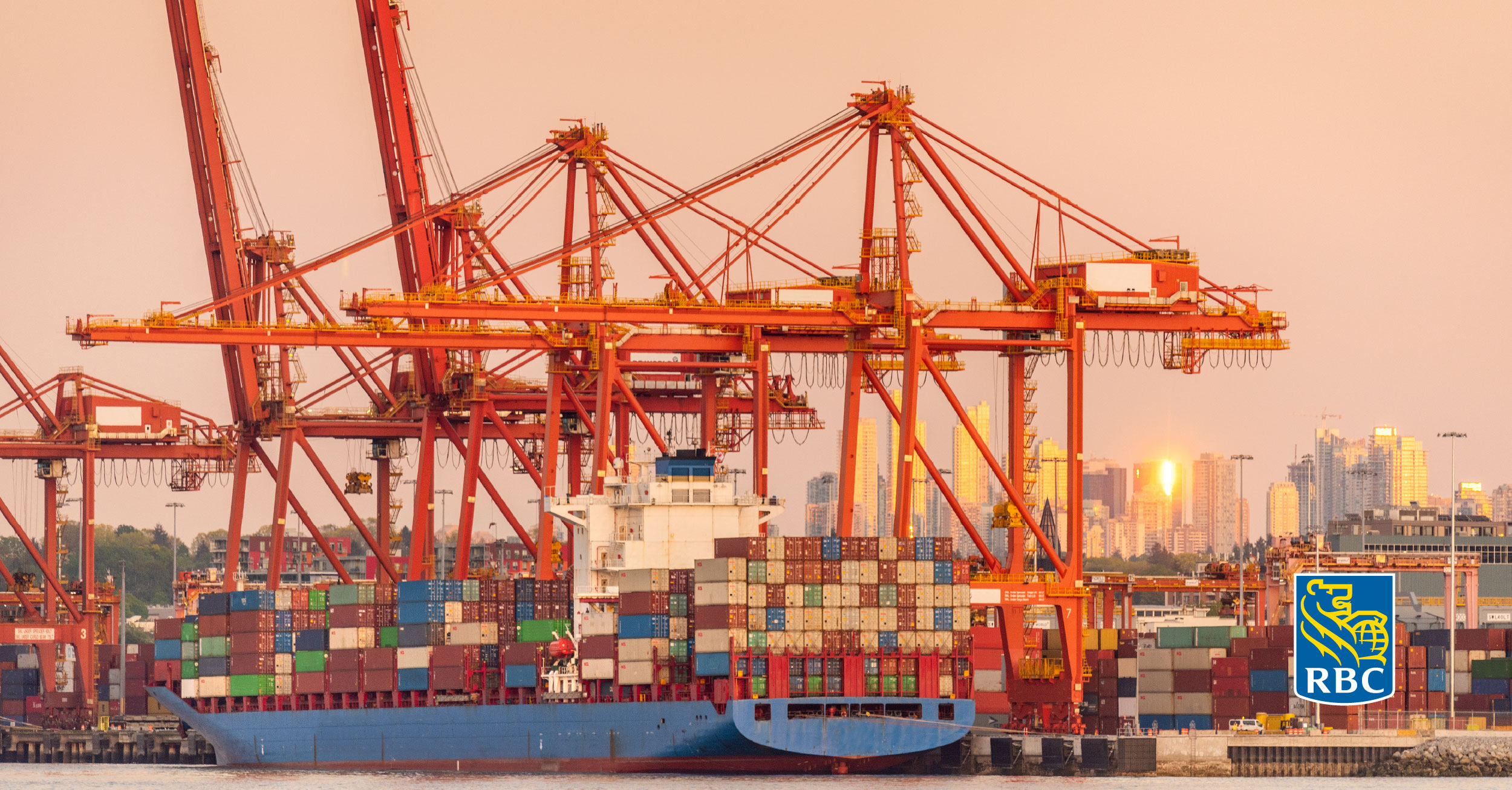
Canada’s prosperity depends heavily on how efficiently it can move goods to market—yet its largest ports have fallen behind the world’s best.
In the latest episode of Disruptors: The Canada Project, John Stackhouse spoke with Devan Fitch, Program Manager of the Roberts Bank Terminal 2. The long-planned project, at the mouth of Fraser River Delta, represents a generational investment in Canada’s competitiveness.
Here’s an excerpt from this week’s episode:
JS: Most Canadians probably take the Port of Vancouver for granted, even though if you look around, at least some of the stuff in your life passed through this port. Give us a sense, Devin, of the magnitude of the Port of Vancouver and what it means to the Canadian economy.
DF: If you take out of the equation all of the trade that we do with the U.S. and you think about the trade that we do with the rest of the world, $1 in every $3 of trade passes through the Port of Vancouver. That’s supporting businesses right across Canada. Consumers right across Canada. We happen to be located in Vancouver, but we are very much Canada’s port.
JS: As I understand it, the Port of Vancouver is the size, nearly, of the next five biggest ports in the country.
DF: That’s correct.
JS: And Roberts Bank will enable it to grow by another 30%. Is that correct?
DF: Yeah, somewhere between 20 and 30%.
JS: What does 30% bigger actually mean?
DF: In one fell swoop, it will increase capacity on the west coast of Canada by approximately one third. It will add 135 hectares of new waterfront trade enabling industrial land in one of the most industrial land constrained regions of North America. To give you a sense of scale of T2 – 12-million cubic metres of sand and 4-million cubic meters of manufactured rock. On the sand side, that’s about 2,500 Olympic sized swimming pools.
JS: Sounds enormous, but how does it compare to the world’s mega ports?
DF: It’s big for Canada. It is modest in size and scale compared to some of the largest ports around the world in Asia and Europe. But certainly a step function increase for Canada. It will provide capacity to move a $100 billion worth of trade goods every single year and support over 17,000 supply chain jobs across the nation.
JS: Give us a sense of how the port business is transforming and what opportunities there may be for Canada to move up in the competition leagues.
DF: Right now the world’s biggest container ships are about 24,000 twenty-foot equivalent units (TEUs). They’re applying their trade from Asia to Europe, and we see shipping lines cascading those large ships onto the North American routes as they age. We’re expecting as we move forward to see a significant increase in the size of ships, calling at the Port of Vancouver. Right now the average size is around 10,000 TEUs and we’re building Roberts Bank Terminal 2 to futureproof it to be able to accommodate ships as large as 24,000 TEUs.
Listen to the full episode here.
In this special season of Disruptors: The Canada Project, we’re crisscrossing the country and speaking to visionary leaders who are harnessing technology to take on Canada’s most-urgent challenges. Listen and subscribe wherever you get your podcasts.
link