Chapter 2: Shifting from reliance to resilience

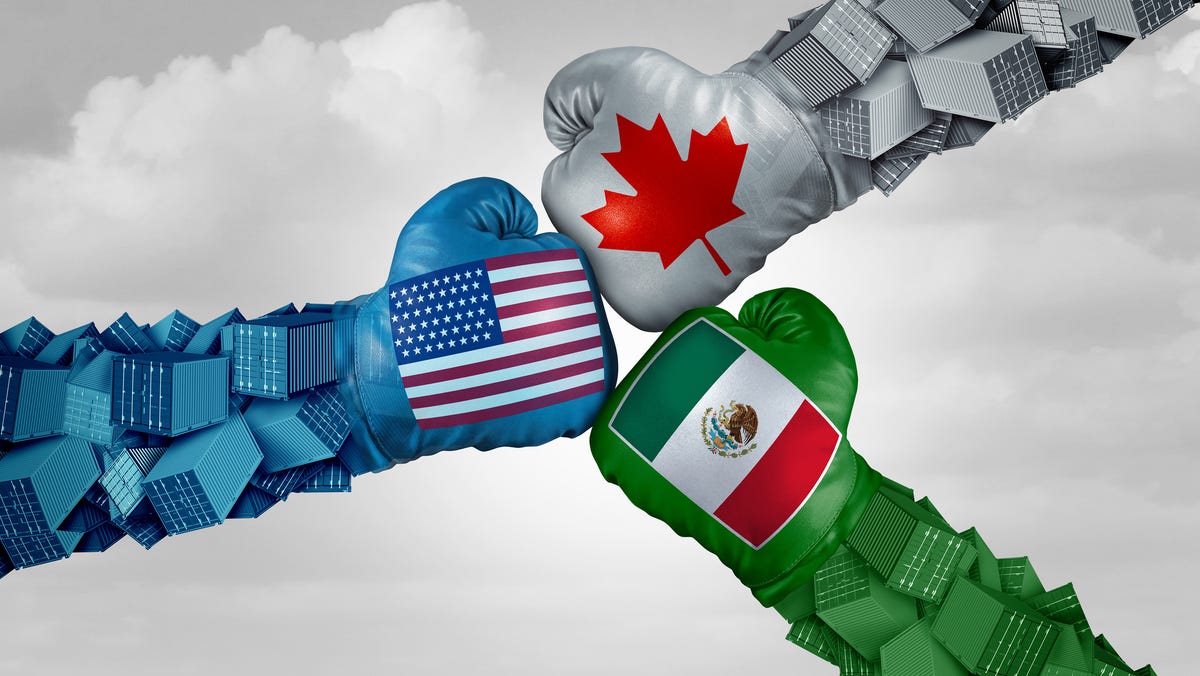
The global trade landscape is rapidly changing, shaped by growing geopolitical tensions and
persistent unfair trade practices. Amid these shifts, the United States is fundamentally
transforming all of its trade relationships. The effective U.S. tariff rate is now the highest
it has been since the Great Depression in the 1930s, and these tariffs are being applied to all
countries and nearly all goods. Canada has the best deal of any U.S. trading
partner—85 per cent of trade with the U.S. is now tariff free and we have the lowest
average tariff of any country in the world. Yet, we cannot rely on our most important trade
relationship as we once did.
The changes in the U.S. policy go beyond tariffs. Countries must now buy access to the world’s
largest economy through investments, unilateral trade liberalisation, and policy changes in
their home markets.
All the while, the transformation of global trade is occurring against a backdrop of wide
economic disruptions: geopolitical realignment, AI and technological transformations, and a
shift to a low-carbon economy.
The effect is profound—hurting companies, displacing workers, disrupting supply chains, forcing
companies to rethink where they source their materials and products, and causing uncertainty
that is curbing investment.
This disruption calls for a new, bold approach. Given we cannot control what other nations do,
Canada’s new government is focused on what we can control: building our strength at home. Canada
will invest in domestic production, Canadian expertise, and diversifying trade with reliable
economic partners. This is how we will meet the challenges of our times: through a strong and
resilient Canadian industrial base.
Our new industrial strategy will transform our economy—from one that is overly reliant on a
single trading partner, to one that is more resilient to global shocks. A new economy built on
the solid foundation of Canadian industries and bolstered by diverse international trade
partners.
2.1 Protecting Canada’s Strategic Industries
In order to protect, retool, and support the largest industrial pivot in a generation, Canada’s
new government introduced a series of new, strategic measures for workers and businesses in
those sectors most impacted by U.S. tariffs and trade disruptions—from the auto industry, to
steel and aluminum, to forestry and agriculture. Canada has also adopted a series of protective
measures—including counter tariffs—in order to safeguard Canadian workers and businesses. These
initiatives will help workers acquire new skills and businesses retool their production and
diversify their products, while spurring more domestic demand for Canadian businesses. As we
build the economy of the future, we are ensuring workers and industries can seize its
opportunities.
These new measures will help give industries and workers the tools they need to build a better
future. With economic uncertainty creating a challenging investment environment in Canada, the
time to act is now. That’s why the government is stepping in with the most comprehensive suite
of trade resilience measures in Canadian history. By supporting our workers and industries, we
will build Canada strong.
Protecting Workers and Transforming Canada’s Strategic Industries
Canada’s new government is building a new industrial strategy to meet this moment. This will
transform our economy—from one of reliance on specific trade partners to one that is more
resilient to global shocks.
Given the urgency of the moment, the government has announced a series of new measures to protect
workers and businesses in sectors most impacted by U.S. tariffs and trade disruptions. During
this time of uncertainty, Canada’s new government is supporting our auto workers and
agricultural producers, manufacturers, and other workers who have felt the effects of trade
tensions. As set out below, over $25 billion has been announced for supports for workers
and businesses, with an expected cost of over $12 billion on an accrual basis over five
years, starting in 2025-26. The government also expects $4.4 billion in tariff
revenue. These measures will help give industries and workers the tools they need to build a
more resilient Canadian economy.
1. Support for Agriculture, Fish, and Seafood
Canada is one of the largest exporters of agriculture, fish, and seafood in the world, and these
sectors contribute to Canada’s competitiveness, sustainability, and food security. The Canadian
agricultural sector is a symbol of the country’s ingenuity, resilience, and ability to move up
the value chain. Together with the fish and seafood sectors, it plays a vital role in
supporting jobs and growth across the country and in rural communities. With clear standards for
labelling food products, the government helps customers choose Canada. The government is helping
these sectors adapt and respond to economic challenges and a shifting trade environment, while
positioning them to take advantage of new opportunities. The government has committed more than
$639 million over five years, starting in 2025-26, for the following measures:
- $109.2 million in 2025-26 to Agriculture and Agri-Food Canada for the
federal-provincial-territorial cost-shared AgriStability program, to
increase the compensation rate for agricultural producers from 80
to 90 per cent, along with raising the payment cap per farm from
$3 million to $6 million. This is available to help agricultural producers cope
with large declines in farming income due to increased costs, adverse market conditions, and
other challenges. - $75 million over five years, starting in 2026-27, to Agriculture and Agri-Food
Canada for the AgriMarketing Program to enhance the diversification and
promotion of Canada’s agriculture, agri-food, fish, and seafood products into new markets. - $97.5 million over two years, starting in 2025-26, to temporarily increase the
Advance Payments Program’s interest-free limit to $500,000 for canola
advances for the 2025 and 2026 program years, together with the temporary increase to
$250,000 of the interest-free limit for all producers for the 2025 program year, which will
result in interest savings for producers while increasing access to cash flow to help cover
costs until they sell their products. - $372 million over two years, starting in 2026-27, to Natural Resources Canada to
establish a Biofuels Production Incentive to support the stability and
resiliency of domestic producers of biodiesel and renewable diesel, of which
$175.2 million will be repurposed from the Clean Fuels Fund; and the intention to make
targeted amendments to the Clean Fuel Regulations to support the domestic biofuels
industry.
In addition, Farm Credit Canada launched the Trade Disruption Customer Support
Program in March 2025 to make available $1 billion in new lending to help
reduce financial barriers for the Canadian agriculture and food industry.
2. Support for Forestry
The government is helping the forestry and softwood lumber sector transform to remain
competitive. These measures will help unlock the full potential of the industry to keep pace
with increased housing and major infrastructure construction.
- Up to $700 million over two years on a cash basis, starting 2025-26, in loan guarantees
administered by the Business Development Bank of Canada, to help ensure companies have the
financing and credit support they need to maintain and restructure their operations during
this period of transformation. - $500 million over three years on a cash basis, starting in 2026-27, to renew and
expand existing Natural Resources Canada’s forestry programs focused on market and product
diversification (including new export initiatives). It also includes a commitment to
prioritise Canadian materials in construction and changing federal procurement processes to
require companies contracting with the federal government to source Canadian lumber.
3. Equipping Companies for Growth and Diversification
Canada’s new government is helping companies overcome immediate trade pressures and providing
them with support to pivot, grow, or diversify their operations by supporting projects to deepen
their reach within Canada and find new reliable markets abroad.
- $5 billion over six years, starting in 2025-26, for the Strategic Response
Fund, a new program with flexible terms to help firms in all sectors and
regions impacted by tariffs to adapt, diversify, and grow. The program will seek to maintain
industrial capacity by offsetting new market access costs, supporting retooling, and helping
Canada-based firms to expand or secure new markets. This includes $1 billion in
Strategic Innovation Fund support for the steel industry’s transition
toward new lines of business and strengthening domestic supply chains announced in
July 2025. - Up to $1 billion over three years, starting in 2025-26, to the Regional
Development Agencies for the Regional Tariff Response Initiative to support
businesses impacted by tariffs across all affected sectors, including increasing
non-repayable contributions for eligible businesses.
4. Supporting Workers
The government is implementing a new reskilling package for workers, has made Employment
Insurance more flexible and with extended benefits, and will launch a new digital jobs and
training platform with private-sector partners to connect Canadians more quickly to careers.
- $570 million over three years, starting in 2025-26, through Labour Market
Development Agreements with provinces and territories to support training and
employment assistance for workers impacted by tariffs and global market shifts. - $382.9 million over five years, starting in 2026-27, and $56.1 million
ongoing, to launch new Workforce Alliances to bring together employers,
unions, and industry groups to work on ways to help businesses and workers succeed in the
changing labour market and coordinate public and private investments in skills development.
A new Workforce Innovation Fund will invest in projects tailored to local
job markets to help businesses in key sectors and regions recruit and retain the
workforce they need. - Temporary flexibilities to the Employment Insurance Work-Sharing
program, as announced on March 7, 2025, to provide EI benefits to
eligible employees who agree to work reduced hours due to a decrease in business activity
beyond their employer’s control. This helps employers and employees avoid layoffs while
supplementing reduced income with EI benefits. This measure is expected to cost
$370.5 million over five years, starting in 2025-26, and $18.5 million
ongoing. - Temporary Employment Insurance measures that enhance income supports for
Canadian workers whose jobs have been impacted by the economic uncertainty caused by foreign
tariffs. These supports are expected to cost $3.7 billion over three years, starting
in 2025-26. - $50 million over five years, starting in 2026-27, and $8 million ongoing, to
implement a new digital tool to facilitate job search and applications, and launch a
national online training platform in partnership with the private sector.
5. Ensuring Access to Financing
The government has also introduced liquidity measures to support small, medium, and large
Canadian businesses. These measures include:
- Launching the Large Enterprise Tariff Loan (LETL) facility, a
$10 billion financing facility designed to support otherwise successful Canadian firms
negatively affected by actual or potential tariffs and countermeasures. The Canada
Enterprise Emergency Funding Corporation (CEEFC) announced its first LETL loan to Algoma
Steel Inc., which will provide Algoma with access to $400 million in liquidity, with
the Government of Ontario contributing an additional $100 million under the same terms
to help stabilise a major Canadian player in the competitive steel industry, amid current
disruptions to the global steel trade. - Enhancing the Business Development Bank of Canada’s $500 million Pivot to
Grow program to provide support to eligible small- and medium-sized steel
enterprises facing liquidity challenges. This program will cost $231 million on an
accrual basis over five years starting in 2025-26. - $940 million in 2025-26 for the deferral of corporate income tax payments and
GST/HST remittances due to the Canada Revenue Agency from April 2 to June 30,
2025, providing up to $40 billion in liquidity support for Canadian businesses.
Becoming Our Own Best Customer
To build our strength at home, we have to focus on what we can control. We can control who we buy
from, and we choose to buy Canadian. The government is launching a new Buy Canadian
Policy—moving from “best efforts” to a clear obligation to buy Canadian. When
domestic suppliers are not available, purchases will be required to include Canadian content or
be sourced from trusted partners. Such cases will remain the exception, not the norm, and will
require ministerial approval. To facilitate the implementation of the Buy Canadian
Policy, the government will also implement regulatory amendments to ensure that Buy
Canadian aspects of federal procurement processes are not subject to review by the Canadian
International Trade Tribunal.
This new approach will extend to all federal agencies and Crown corporations, like VIA Rail and
Alto, which is responsible for the new High-Speed Rail initiative, leveraging every public
dollar to strengthen Canada’s economy, create jobs, and building capacity at home. The policy
will also cut red tape and make it easier for Canadian businesses to access federal procurement
opportunities. This policy will ensure that federal procurement will also support Canadian
social enterprises.
To support this policy, the federal government will also set up a Small and Medium
Business Procurement Program to help Canadian small- and medium-sized enterprises
access federal procurement opportunities.
Canada’s new government is on a mission to build Canada strong through major infrastructure
projects, a modern defence industry, and millions more homes. Through the new Buy
Canadian Policy, we are making government a force for nation-building—becoming our
own best customer, protecting Canadian businesses, and empowering our workers with high-paying
careers that build prosperity at home.
Investing Where It Counts: Resilient Canadian Power
Through the Darlington New Nuclear Project
Canada will be the first G7 country to bring small modular reactor (SMR) power online,
helping to drive innovation, jobs, and industrial growth. At full potential of four
SMRs, the Darlington New Nuclear Project in Bowmanville, Ontario, will provide 1,200
megawatts of clean, reliable electricity, the equivalent of around 1.2 million homes.
The project was made possible through a federal and provincial commitment to invest in a
stronger, more resilient Canada. The project is also an example of securing broader
benefits to the Canadian economy, with an estimated 80 per cent of small modular reactor
construction to occur in Ontario.
As announced on October 23, 2025, financial support includes a $2 billion investment
from the Canada Growth Fund, along with an additional $1 billion investment from
the province of Ontario, through the Building Ontario Fund.
2.2 Growing Canada’s Trade with the World
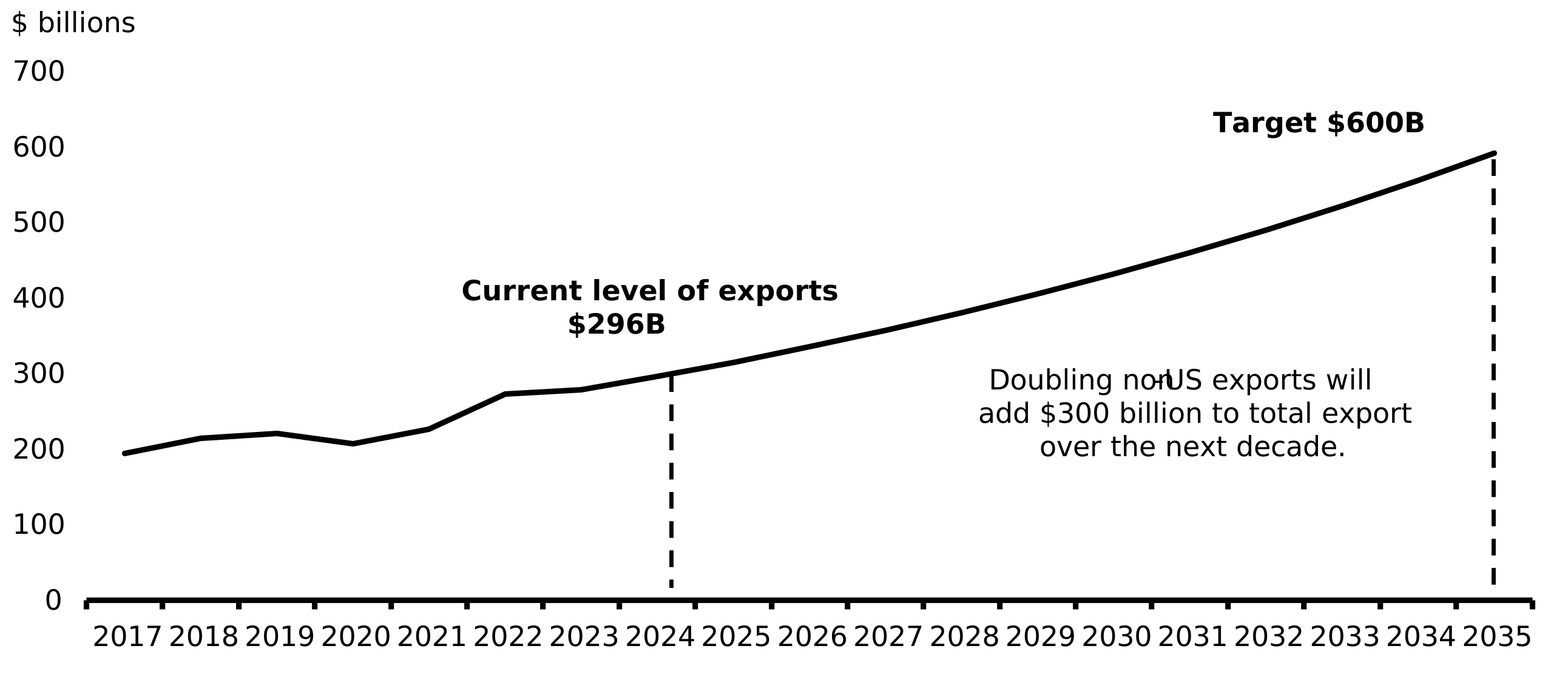
Doubling exports of goods and services to non-U.S. markets over the next decade
A New Trade Infrastructure Strategy
As Canada deepens its trade relationships with reliable partners, we will need to build the
infrastructure that will advance our goal of doubling non-U.S. exports over a decade, generating
$300 billion more in trade. To that end, Budget 2025 includes a suite of new supports
for trade and transportation infrastructure projects. These new initiatives will be supported by
the Canada Infrastructure Bank in assessing projects and determining the appropriate mix of
government supports.
-
Budget 2025 proposes to provide $5.0 billion over seven
years, starting in 2025-26, to Transport Canada to create the Trade Diversification
Corridors Fund. By investing in the infrastructure that moves our products to global
markets, this fund will strengthen supply chains, unlock new export opportunities, and
build a more resilient, diversified economy. The Fund will support projects of all
scales, including digital infrastructure, to improve the ability of our imports and
exports to travel efficiently across the country and to and from the rest of the world.
For example, the government will consider investments in key projects in the Great
Lakes-St. Lawrence Region, at ports in northeastern Québec like enhancing the Port of
Saguenay’s capacity to build a second wharf, rail lines in Alberta, port and rail
infrastructure on the West Coast, and more. - As part of additional resources for Canada Border Services Agency (CBSA) announced on
October 17, 2025, CBSA will work with Public Safety, Transport Canada, and Global
Affairs Canada to identify additional ports for container import and export designation,
particularly in the Great Lakes-St Lawrence Region, like Québec City and Hamilton. This will
help catalyse private investment at ports and is essential to diversifying our trade.
We must also protect our sovereignty in the North and connect northern communities to domestic
and global markets. While increasing trade opportunities and improving defence readiness,
investments in northern transportation infrastructure can improve the lives of northern
residents, including for First Nations, Inuit, and Métis communities, through new connections to
Canada’s economy and transportation network.
Arctic Infrastructure Fund

Investing Where It Counts: Infrastructure to Diversify
Trade
Improving Canada’s transportation network strengthens economic resilience and supports
trade diversification. Canada is a trading nation with trade totaling approximately
two-thirds of gross domestic product (GDP). However, Canada’s trade remains heavily
concentrated with a single partner: the United States. At the same time, Canada has
significant untapped potential to diversify its trade. While Canada’s trade deal with
the United States and Mexico gives preferential access to about 28 per cent of
the global economy, its network of other trade agreements extends that reach to around
66 per cent, including every other G7 country.
Canada holds a comparative advantage not only in primary sectors—such as agriculture, forestry, fishing, mining, and oil and gas—but also across a range of manufacturing industries, including wood, paper, transportation equipment, aerospace, food and beverage, and primary metals. This is in addition to a thriving services, technology and value-added goods trade—the economy of the future.
Unlocking this potential requires targeted, forward-looking investments in trade infrastructure that allow goods to move efficiently, avoiding bottlenecks. To enable this investment, Budget 2025 proposes to invest $6 billion in Canadian transportation infrastructure, which could raise productivity and increase Canadian GDP by up to $21 billion.
Beyond facilitating access to international markets for Canadian companies affected by trade disruptions, these investments will benefit the broader economy by connecting markets, enabling businesses and industries to expand, all while creating jobs and ensuring Canadians have access to alternative suppliers when trade is disrupted. By improving the efficiency and resilience of Canada’s transportation network, trade infrastructure investment directly supports both economic growth and strategic trade diversification.
Growing and Diversifying Canada’s Trade
1. Export Development Canada’s Support for Trade Diversification: Growing Business by
$25 billion
The measures proposed in Budget 2025 expand on recent initiatives brought forward to help
Canadian exporters reach new markets, including Export Development Canada (EDC)’s two-year,
$5 billion Trade Impact Program, which launched in March 2025 and
offers a range of export tools including trade credit insurance, export guarantees, and foreign
exchange guarantees. Across virtually all sectors, companies are facing increased uncertainty
and costs, and EDC continues to actively engage with customers and industry stakeholders to
better understand their needs and to determine how to best support them.
2. Strengthening Ties in the Indo-Pacific and Europe
Canada’s path to long-term economic resilience hinges on diversifying our exports. This means
doing more business across the world—particularly in growth-markets—to increase overall trade
volumes, move beyond traditional north-south trade patterns, and strengthen our collaboration
with reliable trading partners and Allies around the world. In particular, the government will
focus its efforts on the Indo-Pacific—a pivotal source of long-term demand—and in Europe, where
businesses can take advantage of established export links, a similar business culture, shared
geopolitical interests, and emerging sectoral opportunities.
Despite a more expansive free trade network than any other G7 country, offering access to about
two thirds of the global economy, 70 per cent of Canadian exports remained
concentrated in the U.S. as of 2024, with only 4 per cent directed to CETA
markets and 8 per cent to CPTPP countries. Recent survey data from EDC shows that
goods exporters are continuing to prioritise North American and advanced European markets for
expansion, with economies in Asia notably absent from their plans.
Canada enters this period of trade transformation in a highly favourable position—the first G7
country with free trade agreements with all of its G7 partners. Demand is high and will remain
at this level for many of the goods we produce in abundance, including energy, potash and other
critical minerals, agri-food, and related products—as well as value-added goods, services, and
technology. And we are similarly well-placed as an investment destination. In exchange,
partnerships with foreign firms can offer Canadian businesses new footholds in global supply
chains.
The government is committed to equipping Canadian businesses to compete globally in sectors where
we are traditionally strong, as well as in new markets for new advanced technologies that will
shape the economies of the future. This renewed effort, supported by over $1.7 billion in
new investments, forms a key part of Canada’s new comprehensive industrial strategy for building
the strongest economy in the G7.
Leveraging Strategic Opportunities in the Indo-Pacific Region

- Agriculture and Agri-Food
- The Indo-Pacific region is a critical market for Canadian agriculture. Our agri-food
products and innovation can help the region’s population and growing middle-class meet its
food and nutrition needs. - Clean Technology
- Canadian capital, expertise, and cleantech innovations are in demand as Asia seeks to
urbanise and industrialise in a sustainable manner. There are significant opportunities to
export our nuclear technology. - Energy and Infrastructure
- Countries across the Indo-Pacific are making infrastructure investments to support economic
growth, power digital transformation, provide new services, and address climate change. We
can help provide energy security to key partners in the region. - Advanced Manufacturing
- The region is fast to adopt new technologies for manufacturing and digital transformation
which creates opportunities for Canadian innovation. - Service Exports
- Digital services are Canada’s fastest growing export category. There are significant export
opportunities for digital service exports in Indonesia, Japan, and the Philippines.
Leveraging Strategic Opportunities in Europe

- Agriculture and Agri-Food
- European farming and agriculture are changing, and sectors such as artificial intelligence
and nanotech are assuming an increasing role in industry, which is opening a rich source of
business opportunities. - Clean Technology
- Countries throughout Europe have strong demand for Canadian clean technology and energy
products. In 2025, the European Union (EU) released a roadmap to fully end dependency
on Russian energy imports while providing affordable alternatives for citizens and industry. - Continental Defence and Ukrainian Reconstruction
- There are opportunities for Canadian firms to support increased European defence spending,
while Ukraine’s reconstruction needs could total $1 trillion, and Canadian businesses can
benefit from enormous opportunities across nearly every sector, from engineering and energy
to agri-food, health care, and technology. - Minerals and Metals
- Canada-EU cooperation on critical minerals offers strategic opportunities for Canada’s
mining sector. As the top western producer of aluminum, nickel, and platinum, and a source
of copper, Canada has the potential to bring a significant amount of critical minerals into
production, supporting the EU’s electrification, decarbonisation, and national security. - Service Exports
- Canada’s post-pandemic growth in service exports has outshone that of many advanced
economies, and Europe is Canada’s second largest service export market, behind the United
States.
To seize these opportunities, Budget 2025 proposes a step change, and a series of new
measures to help Canadian enterprises compete and succeed internationally. These include
concessional financing to open doors in priority markets, more financial support to help
businesses explore international partnerships, and digitalisation and infrastructure investments
to position Canada as a fast, reliable supplier of choice to the region.
3. Trade Diversification Strategy
Canada is setting a new goal to double non-U.S. exports over the next decade, generating
$300 billion more in trade—that’s an increase of over $100 billion
in 5 years. To do this, Canada must focus on growing areas of key competitive
advantage and supercharging engagement with the world’s fastest growing markets.
- New Strategic Exports Office: Canada’s competitors are increasingly fusing
traditional diplomacy with commercial acumen to help their businesses and workers win
opportunities abroad. To coordinate engagement across all departments and Government of
Canada tools, a new Strategic Exports Office at Global Affairs Canada will curate a pipeline
of international business opportunities and build sophisticated, proactive roadmaps for
Canadian senior-level engagement to open doors and remove roadblocks for Canadian companies.
This Office will operate with resolve and laser-focus to remove longstanding trade
irritants, market access barriers, infrastructure gaps, and financing needs.
4. Making New Business-to-Business Connections in Europe
Building on recent and continuing efforts in the Indo-Pacific region, the government will launch
a series of new initiatives to showcase the talent and competitiveness of Canadian enterprises
in European markets.
Helping Small and Medium-sized Enterprises Abroad
Québec City’s WaterShed Monitoring Inc’s international success is a great Canadian small
and medium-sized enterprise (SME) success story. With the help of Canada’s Trade
Commissioner Service (TCS), the water management company has grown and expanded in
European countries, maintaining a corporate office in France. It is now pursuing
opportunities in the Indo-Pacific region, with company representatives joining a Team
Canada Trade Mission to Malaysia and Vietnam in March 2024 and taking part in the TCS’
first South-East Asia Watertech Canadian Technology Accelerator in Singapore.
5. Removing Barriers and Modernising Trade
In addition to opening up access to new, high-growth markets, ongoing trade negotiations play an
essential role in lowering the barriers businesses face under existing agreements. This includes
important efforts to modernise rules that support trade in the rapidly expanding digital
services sector.
Connecting Canadian Businesses to the Global Market
1. Seizing International Opportunities Through Trade Finance
For over 80 years, EDC has helped exporters to finance deals, offset the risks of doing
business abroad, and access new markets. The government is committed to ensuring EDC’s toolkit
fits the needs of Canadian exporters and supports resilience and growth in the current trade
context.
2. Backing for Businesses Exploring New Markets
Financial supports and specialised advisory services help businesses grow internationally by
enabling them to manage important upfront investments, such as travel, distribution and agent
fees, product licensing, and hiring staff. A range of supports are available through specialised
federal entities, and are often complemented by provincial or territorial programs.
Increasing Food Exports
Canada’s agricultural producers and fish and seafood harvesters are known around the world for
the quality, safety, and sustainability of their products, from canola to seafood to beef.
Recent trade tensions and retaliatory measures have created challenges for these key sectors,
and the government continues to stand behind them in defending fair, rules-based trade. With
global demand for high-quality, nutritious food and plant protein on the rise, Canada is ready
to meet the moment: expanding agriculture and agri-food, fish, and seafood exports, adding more
value at home, and making export processes faster, more efficient, and more digital to help
agriculture producers, harvesters, and processors reach new markets.
As a prominent exporter of grain, Canada is reliant on a robust and well-coordinated supply chain
to facilitate the efficient movement of grain across the country and to international markets.
The government acknowledges the interdependence within Canada’s grain supply chain and is
committed to ensuring interests are appropriately balanced and that the system enables business
investment and confidence in our capacity to meet the transportation needs of the sector.
- The government will continue ongoing work to assess the challenges facing different
stakeholders within the supply chain and how changes in one area may impact others. This
work includes longstanding issues, such as transportation forecasting and planning, and
infrastructure capacity.
Gender and Diversity Impacts Spotlight
Budget 2025 takes action to support Canadian businesses by:
- Prioritising inclusion in federal procurement through a new Buy Canadian
Policy. This will include a Small and Medium
Business Procurement Program to help lower barriers for these
enterprises accessing federal procurement opportunities.
Budget 2025 also works to ensure the benefits of growth are widely shared by removing
barriers that limit participation and access for underrepresented groups by:
- Enhancing Canada’s Trade Access Through Digital Modernisation to
help agriculture, agri-food, fish and seafood producers, harvesters, and processors
export more efficiently. Recognising digital divides, firms with limited internet,
populations with lower digital literacy, and persons with disabilities may face
barriers. To mitigate these barriers, the program will include real-time user
feedback to address accessibility. - Amendments to AgriStability. In the immediate term this program
will support livestock agricultural producers with pasture-related feed charges but
will also take steps to identify barriers for underrepresented groups who may face
challenges in accessing financing, by starting voluntary collection of disaggregated
data in fall 2025.
For more information on the expected impacts of Budget 2025 measures on these and other
diverse groups of Canadians, please see Annex 6.
| 2025-2026 | 2026-2027 | 2027-2028 | 2028-2029 | 2029-2030 | Total | |
|---|---|---|---|---|---|---|
| 2.1 Protecting Canada’s Strategic
Industries1 |
3,041 | 3,974 | 2,501 | 1,482 | 1,091 | 12,089 |
| Protecting Workers and Transforming Canada’s
Strategic Industries – Support for Agriculture, Fish, and Seafood* |
178 | 230 | 201 | 15 | 15 | 639 |
|
Less: Funds Sourced From
|
0 | -3 | -74 | -87 | -12 | -175 |
| Protecting Workers and Transforming Canada’s
Strategic Industries – Support for Forestry |
4 | 225 | 267 | 267 | 97 | 859 |
| Protecting Workers and Transforming Canada’s
Strategic Industries – Equipping Companies for Growth and Diversification* |
594 | 1,201 | 1,948 | 1,503 | 1,253 | 6,499 |
|
Less: Funds Previously
|
-1,000 | -250 | -250 | -250 | -250 | -2,000 |
| Protecting Workers and Transforming Canada’s
Strategic Industries – Supporting Workers |
1,989 | 2,371 | 371 | 104 | 103 | 4,939 |
| Protecting Workers and Transforming Canada’s
Strategic Industries – Ensuring Access to Financing |
1,276 | 159 | -7 | -108 | -149 | 1,171 |
| Becoming Our Own Best Customer2 | 0 | 41 | 45 | 38 | 33 | 157 |
| 2.2 Growing Canada’s Trade with the World | 33 | 741 | 1,211 | 1,412 | 1,037 | 4,433 |
| A New Trade Infrastructure Strategy* | 15 | 690 | 1,140 | 1,340 | 965 | 4,150 |
| Making New Business-to-Business Connections in
Europe |
0 | 2 | 2 | 2 | 2 | 8 |
| Removing Barriers and Modernising Trade | 0 | 5 | 5 | 5 | 5 | 20 |
| Seizing International Opportunities Through Trade
Finance |
64 | 48 | 48 | 0 | 0 | 159 |
|
Less: Projected Revenues
|
0 | -1 | -2 | -3 | -3 | -10 |
|
Less: Funds Sourced From
|
-46 | -46 | -46 | 0 | 0 | -138 |
| Backing for Businesses Exploring New Markets* | 0 | 26 | 46 | 48 | 48 | 167 |
|
Less: Funds Previously
|
0 | -5 | -4 | -4 | -4 | -17 |
| Increasing Food Exports* | 0 | 22 | 23 | 24 | 24 | 94 |
| Additional Investments – Shifting from Reliance to
Resilience |
0 | 5 | 5 | 1 | 1 | 12 |
| Migrating the Canada Tariff Finder Software* | 0 | 0 | 0 | 1 | 1 | 1 |
| Funding proposed for GAC to maintain
the Canada Tariff Finder on a new server. The tariff finder provides important information on tariff rates in world markets to Canadian companies. |
||||||
| Trade Controls to Defend Canadian Steel | 0 | 4 | 4 | 0 | 0 | 9 |
| Funding proposed for GAC to support the
effective implementation of trade controls to defend the steel industry from trade diversion and global excess capacity. |
||||||
| Enhancing Economic Expertise on Exporting Sectors | 0 | 1 | 1 | 1 | 1 | 2 |
| Funding proposed for GAC to augment
economic analysis and policy expertise on exporting sectors. |
||||||
| Amendments to AgriStability | 0 | 8 | 8 | 8 | 8 | 33 |
|
Less: Funds Sourced From Existing Departmental
|
0 | -8 | -8 | -8 | -8 | -33 |
| Amendments to the
federal-provincial-territorial cost-shared AgriStability program to make pasture-related feed costs eligible under the program. |
||||||
| Chapter 2 – Net Fiscal Impact | 3,074 | 4,720 | 3,717 | 2,895 | 2,129 | 16,534 |
| Of which, capital investment: | -541 | 1,442 | 2,639 | 2,548 | 1,951 | 8,040 |
|
1 Several measures in Section 2.1. were announced between
2 Becoming Our Own Best Customer was announced on
*Measure includes funding classified as a capital investment.
Note: Numbers may not add due to rounding. A glossary of abbreviations used
|
||||||
link